Cold Storage in Riyadh: Chilled vs Frozen Explained for 2026
Cold storage in Riyadh is the invisible backbone of every supermarket shelf, restaurant kitchen, and pharmacy fridge in the capital. As food imports and local production both climb through 2026, the businesses that win are the ones who understand the difference between chilling and freezing, and who match each product to the right temperature. Get it wrong and you lose stock, trust, and sometimes your licence. Get it right and you unlock longer shelf life, less waste, and happier customers.
This guide demystifies the cold chain, compares chilled and frozen storage side by side, and gives you a practical playbook for protecting temperature-sensitive goods in Riyadh’s demanding climate.
Understanding the Cold Chain From Dock to Plate
The cold chain is the unbroken sequence of refrigerated steps that keeps a product within its safe temperature range from the moment it is produced until it reaches the end user. A single weak link, a warm truck or a slow loading bay, can undo the entire chain and spoil goods that looked perfectly fine.
In Riyadh, where outdoor temperatures regularly exceed 45°C in summer, the margin for error is thin. Every transfer point between storage, transport, and display is a risk that disciplined operators plan around rather than hope through.
Why Temperature Zones Matter So Much
Bacteria multiply fastest between roughly 5°C and 60°C, the so-called danger zone. Chilled storage sits just below it to slow spoilage, while frozen storage halts microbial activity almost entirely. The World Health Organization emphasises temperature control as a core pillar of safe food handling, and that principle drives every decision in a well-run facility.
Chilled vs Frozen: What Is the Real Difference?
People use “cold storage” as a catch-all, but chilled and frozen are two distinct disciplines with different equipment, costs, and best-use cases. Choosing the wrong one either spoils your product or wastes energy and texture quality.
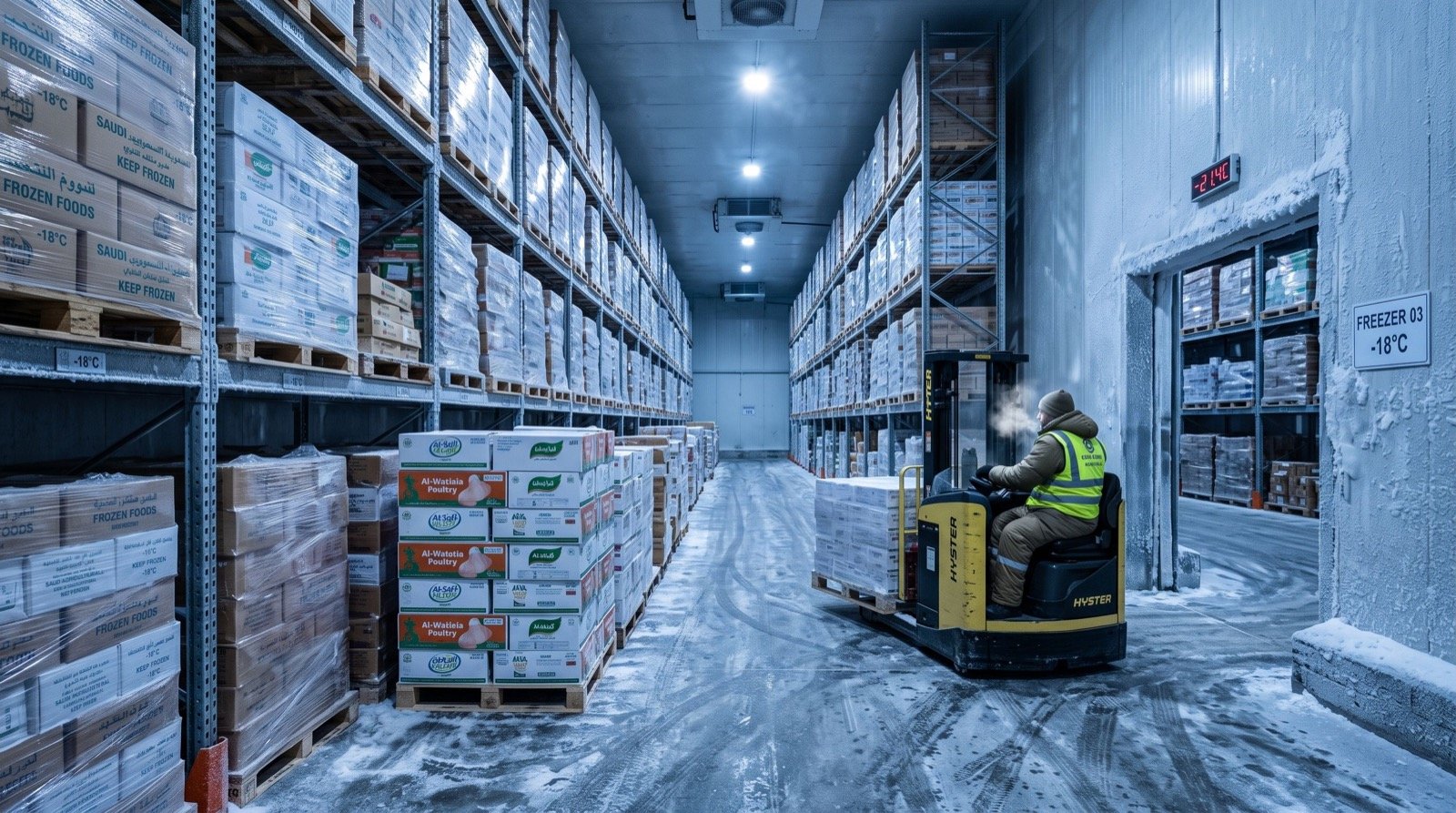
Chilled storage holds goods just above freezing, typically 0–8°C, preserving fresh character for days to a few weeks. Professional Chilled Storage in Riyadh is ideal for dairy, fresh produce, and ready meals that must stay fresh but never freeze. Frozen storage, by contrast, drops to -18°C or lower to lock products for months.
| Attribute | Chilled Storage | Frozen Storage |
|---|---|---|
| Temperature range | 0°C to 8°C | -18°C or colder |
| Typical shelf life | Days to weeks | Months |
| Best for | Dairy, produce, fresh meat | Seafood, meat, ice cream |
| Energy use | Moderate | High |
| Texture impact | Minimal | Possible if mishandled |
For goods destined to last a season, dedicated Frozen Storage in Riyadh provides the deep, stable cold that prevents ice-crystal damage and preserves both safety and quality over the long haul.
Which Products Belong in Which Zone?
Matching product to zone is the single most important daily decision in cold logistics. Here is a quick reference that experienced operators follow instinctively.
- Chilled: milk, yoghurt, cheese, fresh fruit and vegetables, deli meats, prepared salads
- Frozen: seafood, poultry, red meat, ice cream, frozen bakery dough, long-term vegetable stock
- Never freeze: most leafy greens, whole eggs in shell, certain soft cheeses that lose texture
The Blast-Freezing Advantage
Freezing speed changes everything. Slow freezing forms large ice crystals that rupture cell walls, so meat and fish turn mushy on thawing. Blast freezing drops the core temperature rapidly, creating tiny crystals that preserve texture. If your products command a premium, blast capability is worth paying for.
How to Protect the Cold Chain in 2026
Technology has made cold-chain integrity measurable rather than assumed. The best facilities now prove their performance with data instead of promises, and you should expect the same from any partner.
- Install continuous monitoring. Wireless sensors log temperature every few minutes and alert staff instantly on any breach.
- Back up the power. Automatic generators keep compressors running through outages, the most common cause of catastrophic loss.
- Insulate transfer points. Air-curtains and sealed docks stop warm air flooding in during loading.
- Train the team. Even the best equipment fails if doors are propped open or pallets sit on a hot bay.
- Audit regularly. Monthly checks against logged data catch drifting equipment before it fails.
Choosing an experienced local team for handling and transport ensures the chain stays intact during the vulnerable moments between storage and delivery.
Common Cold Storage Mistakes to Avoid
Most spoilage incidents trace back to a handful of avoidable errors. Overpacking shelves blocks airflow and creates warm pockets. Opening doors too often lets cold escape and invites condensation. Mixing incompatible goods causes odour transfer and cross-contamination.
The fix is operational discipline: load to recommended capacity, minimise door openings, and separate strong-smelling items like fish from dairy. These habits cost nothing and prevent the majority of losses I have seen on warehouse floors.
The Business Case for Professional Cold Storage
Running your own large-scale refrigeration is capital-intensive and technically demanding. Compressors, backup power, and compliance monitoring all cost money and attention that most food businesses would rather spend on their core trade. Outsourcing shifts that burden to specialists.
There is a sustainability angle too. Shared, purpose-built facilities run modern, energy-efficient refrigeration that a single business could rarely justify alone, lowering both carbon footprint and running cost per pallet. As energy prices and environmental expectations climb in 2026, that efficiency is becoming a genuine competitive edge rather than a nice-to-have.
Frequently Asked Questions
What is the ideal temperature for chilled storage?
Most chilled goods sit safely between 0°C and 5°C, with 8°C as the outer limit. Dairy and fresh meat prefer the colder end, while some fruits and vegetables do better slightly warmer to avoid chill injury.
Can I store chilled and frozen goods in the same facility?
Yes, and most professional operations run multiple zones under one roof. The key is genuine physical and thermal separation, so frozen rooms never leak cold into chilled areas and each zone holds its own precise range.
How long can frozen food last in storage?
At a steady -18°C or colder, many frozen foods keep their quality for several months and remain safe far longer. Texture, not safety, is usually the limiting factor, so rotate stock to serve the best eating quality.
What happens during a power outage?
A well-insulated frozen room holds temperature for hours, but reliable facilities never rely on that buffer. Automatic backup generators are essential; without them, a long outage can spoil an entire warehouse of stock in a single afternoon.
Final Thoughts
Mastering cold storage in Riyadh comes down to one principle: match every product to the right temperature and never let the chain break. Understand when to chill and when to freeze, monitor relentlessly, back up your power, and train your people. In 2026, the businesses that treat the cold chain as a precision discipline rather than a background utility are the ones that cut waste, protect reputation, and keep their customers coming back.